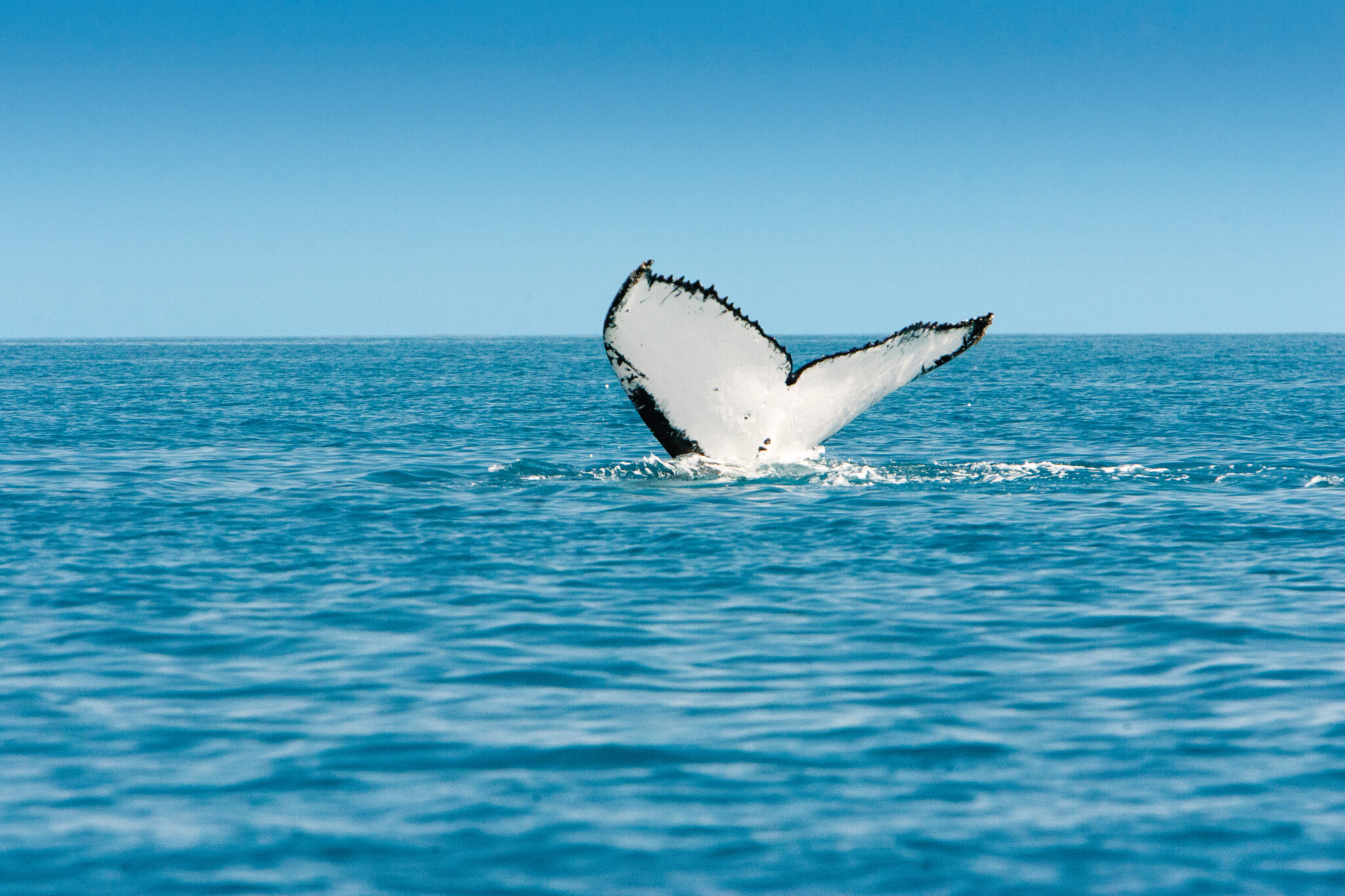
Humpback Whales
Plan your private yacht charter around one of the ocean’s greatest seasonal migrations - the humpback whales in Australia and South Pacific.
Nature Calendar
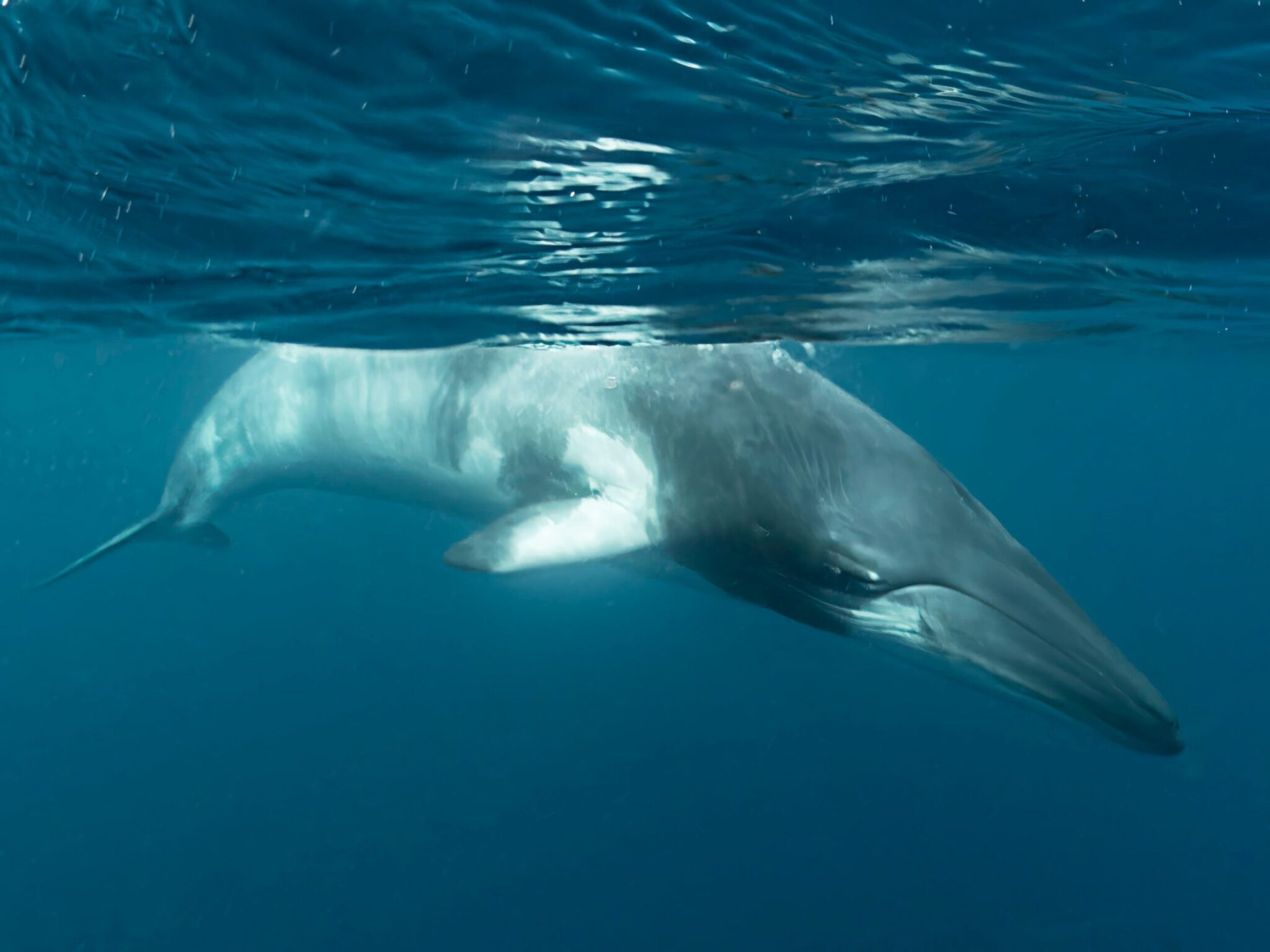
Plan your private yacht charter around one of the Great Barrier Reef’s rarest seasonal encounters. Each winter, dwarf minke whales gather along the northern Great Barrier Reef, creating the only known predictable seasonal aggregation of these whales anywhere in the world. Their naturally inquisitive behaviour and willingness to approach stationary vessels and snorkellers make this one of the reef’s rarest and most extraordinary wildlife experiences.
The strongest opportunity occurs beyond Port Douglas around Agincourt Reef and the Ribbon Reef, Australia. Dwarf minke whales have been recorded in the northern Great Barrier Reef from May to October, but approximately 90 per cent of reported encounters occur during June and July.
A private yacht provides the foundation for a more immersive northern Great Barrier Reef journey. Guests can explore several reef systems, snorkel or dive in clear outer-reef waters and enjoy the privacy and personalised service of a charter created around their group.
Where guests wish to enter the water with dwarf minke whales, the encounter must be conducted through a vessel holding the specific Great Barrier Reef Marine Park permission required for swimming with whales. YOTSPACE can incorporate an endorsed operator into the wider private yacht itinerary while retaining the privacy and flexibility of the overall journey.
Wildlife remains unpredictable. A sighting or in-water interaction can never be guaranteed, and every encounter must be initiated and controlled by the whale.
The most reliable place to encounter dwarf minke whales is the outer northern Great Barrier Reef between Port Douglas and Lizard Island, particularly around the Agincourt Reef complexes and the Ribbon Reefs.
Research and tourism-monitoring data identify three principal encounter regions:
The majority of reported encounters have occurred within the Agincourt and Ribbon Reef complexes, often while vessels were stationary at established reef sites.
Port Douglas is the natural starting point for a luxury minke whale journey. It offers direct access to Agincourt Reef and provides the accommodation, dining, transfers and private-yacht infrastructure needed to create a complete Tropical North Queensland escape.
Agincourt Reef is particularly relevant for shorter journeys. Guests can combine a private yacht charter with outer-reef snorkelling, diving and a possible seasonal whale sighting. Longer itineraries continuing north through the Ribbon Reefs provide more time within the wider encounter region. but the yacht, reef and destination combine to create the complete experience.
| Planning detail | YOTSPACE guidance |
| Primary departure destination | Port Douglas, Tropical North Queensland |
| Main encounter region | Agincourt Reef and the northern Ribbon Reefs |
| Broader distribution on the reef | Northern Great Barrier Reef between Port Douglas and Lizard Island |
| Broad seasonal window | March to October |
| Strongest encounter period | June and July |
| Main experiences | Private reef cruising, snorkelling, diving, whale sightings and permitted in-water encounters |
| Recommended journey length | Three to seven nights |
| Best suited to | Couples, families, divers, snorkellers and wildlife travellers |
| Yacht style | Luxury motor yacht, superyacht or expedition yacht suited to outer-reef cruising |
| In-water requirement | A specifically endorsed swimming-with-whales tourism operator |
| Important limitation | Sightings and interactions cannot be guaranteed |
Dwarf minke whales are among the smallest baleen whales, although adults can still reach approximately eight metres in length. They have distinctive white and dark colour patterns and are active, highly manoeuvrable animals capable of moving quickly through the water.
What sets the northern Great Barrier Reef encounter apart is the whales’ curiosity. Dwarf minkes may choose to approach stationary vessels and remain near swimmers or divers for extended periods. Some circle repeatedly, pass beneath snorkellers or appear to inspect individual guests as they move through the water.
The interaction is fundamentally different from pursuing a whale at the surface. Swimmers remain in a controlled position while the whale decides whether to approach, how close to come and when to leave. That uncertainty is part of what makes the experience so powerful. Guests are not watching a staged performance. They are being observed by a wild animal in one of the world’s most remarkable marine environments.
June and July provide the strongest opportunity to encounter dwarf minke whales on the northern Great Barrier Reef, Australia.
Although sightings have been recorded from May to October, encounter data show a clear peak in late June and early July. Approximately 90 per cent of reported Great Barrier Reef encounters have occurred across these two months.
| Month | Seasonal opportunity |
| May | The recognised winter encounter season begins to build |
| June – July | Peak seasonal opportunity for sightings and interactions for Dwarf Minke Whales on the Great Barrier Reef |
| August | Later-season encounters remain possible |
| September – October | Occasional sightings may occur, but predictability declines |
These periods reflect broad historical patterns rather than fixed arrival dates. Whale movements and individual encounters vary each year.
A minke whale journey may include sightings from the yacht, reef snorkelling, diving or a separately managed in-water encounter.
| Encounter type | What guests may experience | How it fits a private yacht journey |
| Sighting from the yacht | A whale surfacing, travelling or choosing to approach the vessel | A natural addition to outer-reef cruising |
| Agincourt Reef encounter | A possible sighting while snorkelling or diving at the outer reef | Suits shorter Port Douglas itineraries |
| Multi-day Ribbon Reef journey | Several days exploring reef systems where encounters are regularly reported | Offers greater itinerary flexibility and more time in the seasonal region |
| Permitted snorkelling encounter | Whales approaching swimmers positioned on a surface line | Incorporated through an endorsed tourism operator |
| Diving encounter | A whale passing or circling divers at an approved reef location | Suits certified divers and dive-led journeys |
| Research and interpretation | Learning about whale behaviour, identification and monitoring | Adds scientific and conservation context |
A longer journey provides more time within the encounter region, but it does not guarantee that whales will appear.
A private yacht allows guests to experience minke whale season as part of a complete luxury reef journey rather than a single scheduled wildlife excursion.
Depending on the yacht and itinerary, guests may:
The whale encounter may inspire the journey, but it should not be the only reason the charter is rewarding. The coral gardens, marine life, outer-reef waters and personalised experience onboard remain central to the voyage.
Agincourt Reef is a series of outer ribbon reefs located off Port Douglas and forms part of one of the principal regions where dwarf minke whale encounters have been documented.
The reef system provides coral gardens, channels, reef edges and established snorkelling and diving sites. During the winter season, whales may pass through these waters or choose to approach stationary vessels.
Agincourt Reef is well suited to guests who want a shorter private Port Douglas escape. A journey may combine:
Guests prioritising the greatest number of potential encounter days should consider a longer journey into the Ribbon Reefs rather than relying on one day at Agincourt.
Swimming with dwarf minke whales may be incorporated into your journey when arranged in advance with an operator holding the required Great Barrier Reef Marine Park endorsement.
Only a limited number of commercial vessels are authorised to place swimmers in the water specifically for a dwarf minke whale encounter. YOTSPACE can coordinate this permitted experience alongside your private yacht charter, creating a seamless journey through Port Douglas, Agincourt Reef and the northern Great Barrier Reef.
Even without a dedicated in-water encounter, seeing a dwarf minke whale while cruising, snorkelling or diving on the outer reef is an unforgettable experience. These naturally inquisitive whales may choose to approach a stationary yacht, reef vessel or people who are already in the water.
If a whale approaches while guests are already snorkelling or diving, they may quietly observe it as it passes. Guests must move slowly, never swim towards, touch, feed or restrict the whale, and allow it to control the distance and duration of the encounter. People in the water must not deliberately approach within 30 metres of a whale.
A vessel without the specific swimming-with-whales endorsement cannot place guests in the water for the purpose of encountering a whale or allow them to enter the water within 100 metres of one. If a dwarf minke whale appears after guests are already in the water, the encounter must remain passive and entirely initiated by the whale.
Whether viewed from the deck, encountered while already exploring the reef or experienced through a permitted operator, the moment remains unscripted. Dwarf minke whales are wild animals in their natural habitat, and every interaction must take place on their terms.
| Whale behaviour | What guests may observe |
| Close pass | A whale moving slowly beside the vessel, swimmers or divers |
| Repeated approach | A whale circling and returning several times |
| Eye-to-eye pass | The whale rolling slightly as it moves beside a swimmer |
| Deep pass | A whale travelling beneath snorkellers or divers |
| Surface swim | The whale remaining visible near the surface |
| Vessel approach | A whale choosing to investigate a stationary or drifting vessel |
| Group encounter | Several whales joining the same interaction |
Most reported encounters involve a single whale or a pair, although larger groups have occasionally gathered around vessels.
No behaviour can be predicted or encouraged. The whale must remain free to approach or leave at any time.
A private yacht journey can suit families and multigenerational groups because activities can be adapted to different interests and swimming abilities.
Confident swimmers may participate in snorkelling, diving or a permitted whale encounter, subject to the operator’s age and ability requirements. Other guests may enjoy reef viewing, private cruising, onboard interpretation and time relaxing on the yacht.
The vessel should be chosen for its stability, shaded spaces, water access and ability to provide comfortable alternatives for guests who do not enter the water.
YOTSPACE only incorporates in-water dwarf minke whale encounters through operators holding the required Great Barrier Reef Marine Park permission.
Responsible encounters require:
The size of the wider dwarf minke whale population remains unknown, and researchers continue to rely heavily on tourism-vessel sightings, photographic identification and other monitoring methods. This makes careful management and responsible operator participation particularly important.
The private nature of a yacht charter does not provide special access to wildlife or an exemption from marine park rules.
No. Neither a sighting nor an in-water encounter can be guaranteed.
June and July provide the strongest historical opportunity, and a longer itinerary creates more time within the recognised encounter region. However, whale movements remain natural and unpredictable.
The wider journey should remain exceptional through Agincourt Reef, the Ribbon Reefs, snorkelling, diving and the personalised experience onboard, whether or not a whale appears.
A dwarf minke whale journey should be planned early because the peak season is concentrated into June and July and only a limited number of operators hold the required in-water permissions.
For the strongest selection of yachts, Port Douglas accommodation and endorsed encounter dates, planning nine to twelve months ahead is sensible. Peak school-holiday periods, larger private groups and premium yachts may require earlier arrangements.
The outer northern Great Barrier Reef between Port Douglas and Lizard Island provides the world’s only known predictable seasonal aggregation. The strongest documented encounter regions are Agincourt Reef and the northern Ribbon Reefs.
Dwarf minke whales may be recorded in the northern Great Barrier Reef from May to October, but June and July provide the strongest opportunity and account for approximately 90 per cent of reported encounters.
Only if the yacht holds the specific Great Barrier Reef Marine Park permission required to conduct swimming-with-whales tourism. Otherwise, YOTSPACE can incorporate an appropriately endorsed operator into the wider private yacht itinerary.
No. More days on the reef create greater flexibility and additional potential encounter windows, but no charter length can guarantee a whale sighting or interaction.
YOTSPACE combines more than 50 years of collective experience across luxury travel and superyacht operations with destination knowledge throughout Tropical North Queensland and the Great Barrier Reef.
We understand that a dwarf minke whale encounter cannot be treated as a conventional charter inclusion. The yacht, seasonal timing, reef itinerary and permitted operator must be coordinated carefully and transparently.
YOTSPACE brings these elements together into one seamless journey while ensuring the wildlife encounter remains lawful, realistic and conservation-led.
Begin with the type of journey that suits your group: a short Port Douglas escape, a private yacht charter through Agincourt Reef, a longer northern Great Barrier Reef voyage or a dive-led expedition through the Ribbon Reefs.
YOTSPACE will help coordinate the yacht, seasonal dates, accommodation, transfers and endorsed whale operator required to create the experience.
Every journey is planned around the strongest natural opportunity, the privacy of a tailored yacht charter and respect for one of the Great Barrier Reef’s most extraordinary winter visitors.
Plan your private yacht charter around one of the ocean’s greatest seasonal migrations - the humpback whales in Australia and South Pacific.
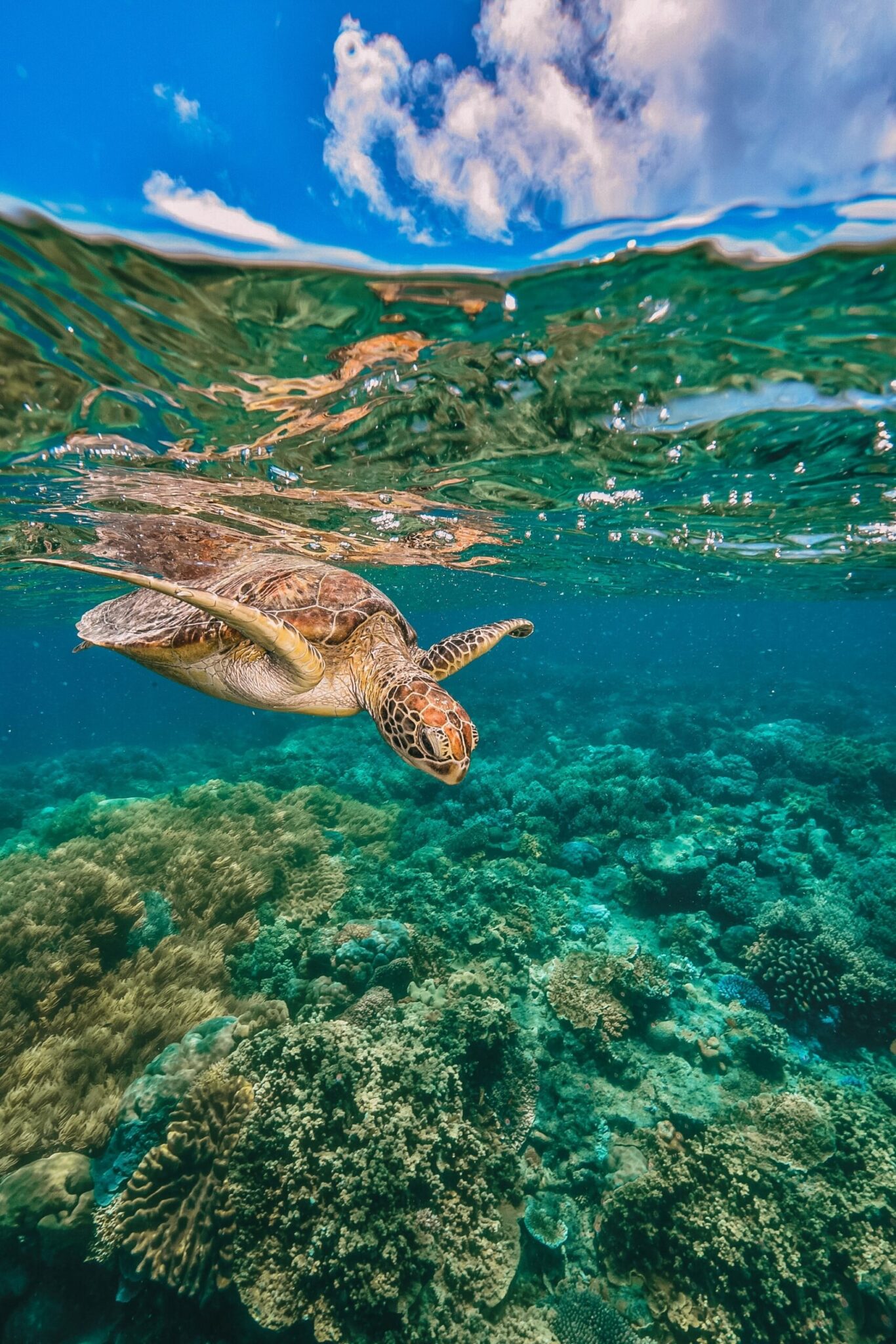
Discover where and when to encounter sea turtles by luxury yacht across Australia, the South Pacific, Maldives & Southeast Asia with YOTSPACE.