
Beneath the Whitsundays: The Underwater Sculpture Trail | Luxury Yacht Charter Guide
Estimated reading time: 10 minutes
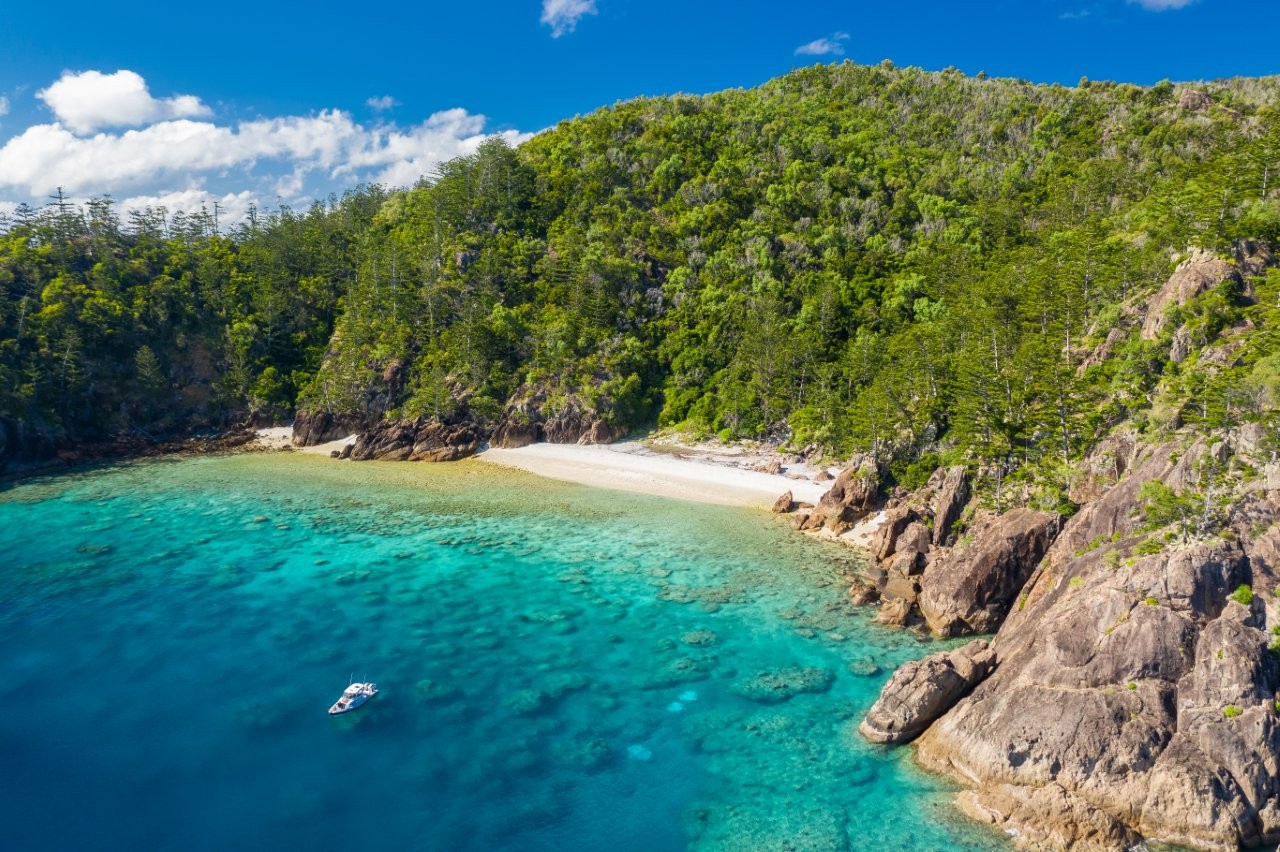
Most people come to the Whitsunday Islands for what they can see above the water. Whitehaven Beach in impossible shades of white and blue. Hill Inlet swirling like liquid marble. Long island lunches, warm trade winds, and sunsets that seem designed for the deck of a luxury charter yacht.
What few realise is that one of the region’s most fascinating experiences lies below the water’s surface.
Beneath the Whitsundays: The Underwater Sculpture Trail Few Travellers Ever Discover
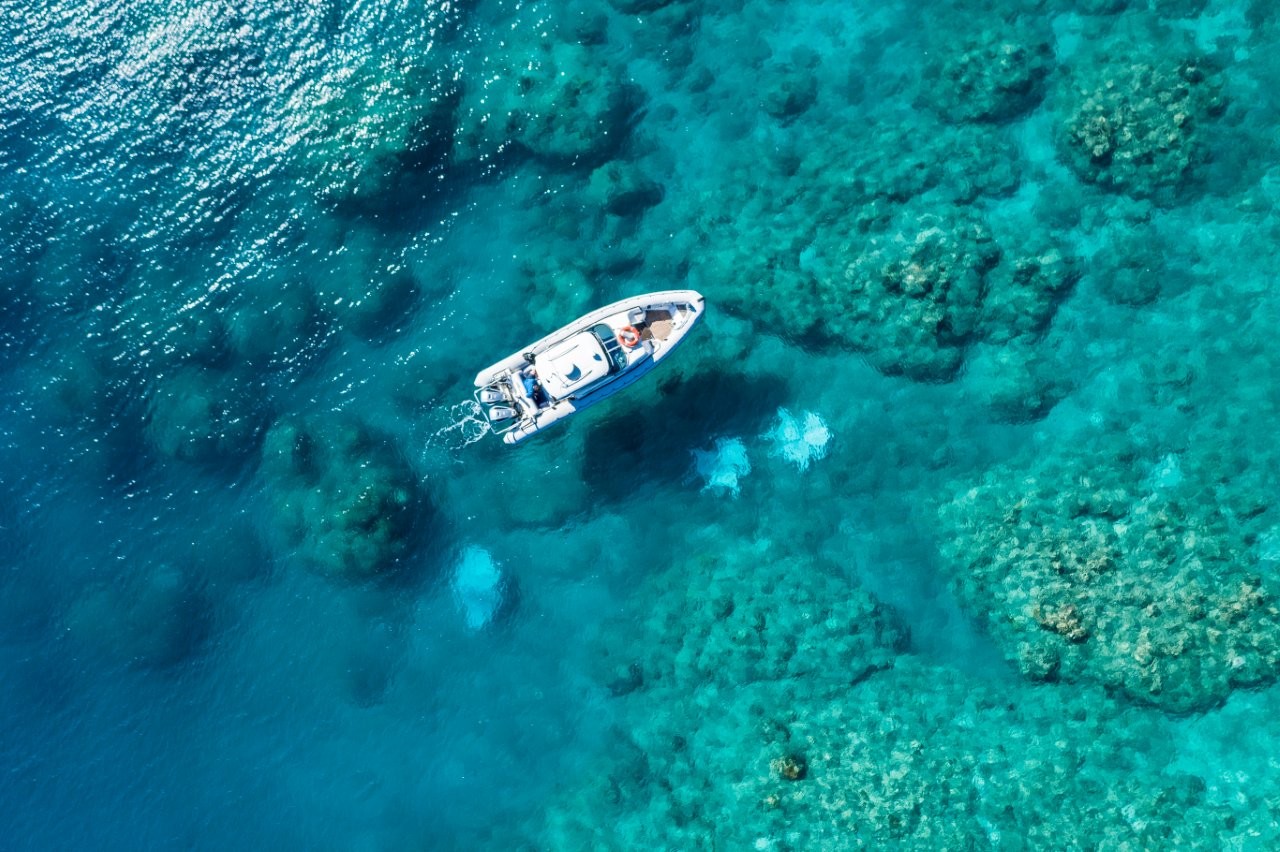
Hidden in selected bays and reef-fringed coves is the Whitsundays Ngaro Underwater Marine Sculpture Trail — a collection of commissioned artworks inspired by marine life, reef ecology, and cultural storytelling. Suspended beneath the sea, these sculptures transform an ordinary swim stop into something far more memorable: part adventure, part art gallery, part connection to place.
For guests travelling by private yacht, it becomes one of those experiences people talk about long after the charter ends. Not because it is crowded or famous, but because they did not expect it to exist at all.
At YOTSPACE, our locally based team has been arranging superyacht charters on the Great Barrier Reef for more than 20 years. We know when the islands are at their most beautiful, when conditions are at their best, and how to weave discoveries like this into a seamless luxury yacht charter itinerary to surprise and delight our guests.
Underwater Art – A different side of the Whitsundays
The Whitsundays has never lacked natural beauty. Yet beauty alone is not what sophisticated travellers remember most. They remember the unexpected moments — the hidden beach no one else was on, the turtle surfacing beside the yacht at breakfast, the bay reached only because the captain knew the weather would be perfect there by afternoon.
The Whitsundays underwater art installation sculpture trail belongs in that category.
It offers a more curious version of the Whitsundays. One that invites guests to look beneath the postcard scenery and engage with the marine world in a deeper way. Fish shelter around the installations. Coral and algae begin to colonise surfaces. Light moves across metal and stone in shifting patterns. The artworks do not sit apart from nature; they become part of it.
Why the trail exists
The trail was created as part of the region’s recovery and renewal following Cyclone Debbie in 2017. Alongside rebuilding infrastructure and tourism experiences came an opportunity to create something meaningful – a project that celebrated the Whitsundays while encouraging visitors to value the reef environment around them.
Artists, tourism leaders, environmental partners, and cultural collaborators all played a role in shaping the collection. Today, the result feels less like a conventional attraction and more like a secret the islands keep for those willing to explore.
Hook Island: manta rays beneath the surface
Among the most celebrated works are those found at Hook Island, one of the Whitsundays’ most dramatic cruising grounds. Its rugged ridgelines, deep inlets, and protected bays make it a favourite on multi-day yacht charter itineraries.
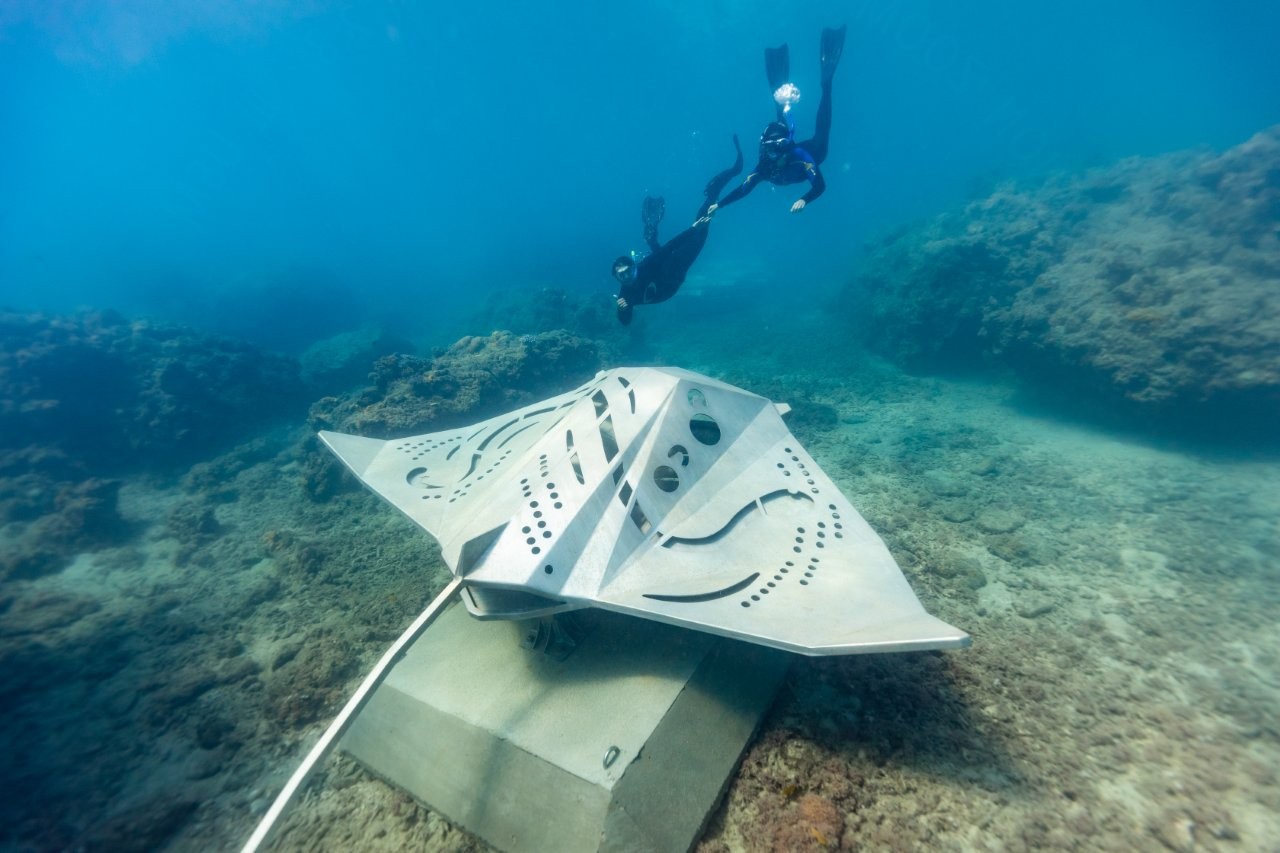
Here, guests can discover Manta Ray and Migration of the Mantas, two sculptures that capture the grace and movement of one of the ocean’s most elegant creatures.
Manta Ray sits in approximately five to six metres of water, making it one of the easier sculptures for confident snorkellers to enjoy when visibility is good. Migration of the Mantas is generally deeper, often referenced between four and ten metres depending on tide and measurement point, making it especially rewarding for divers and stronger swimmers.
Hook Island lies roughly 22 to 28 nautical miles from Airlie Beach, around 10 to 16 nautical miles from Hamilton Island, and approximately 18 to 25 nautical miles from Whitehaven Beach.
This part of the trail is often paired with an overnight stay in Nara Inlet, where the yacht settles into calm evening water while the cliffs glow in late light.
Marine life around Hook Island may include parrotfish, butterflyfish, coral trout, trevally, turtles, rays, and occasional reef sharks.
Langford Island: turtles, coral and clear shallows
If Hook Island feels dramatic, Langford Island feels refined.
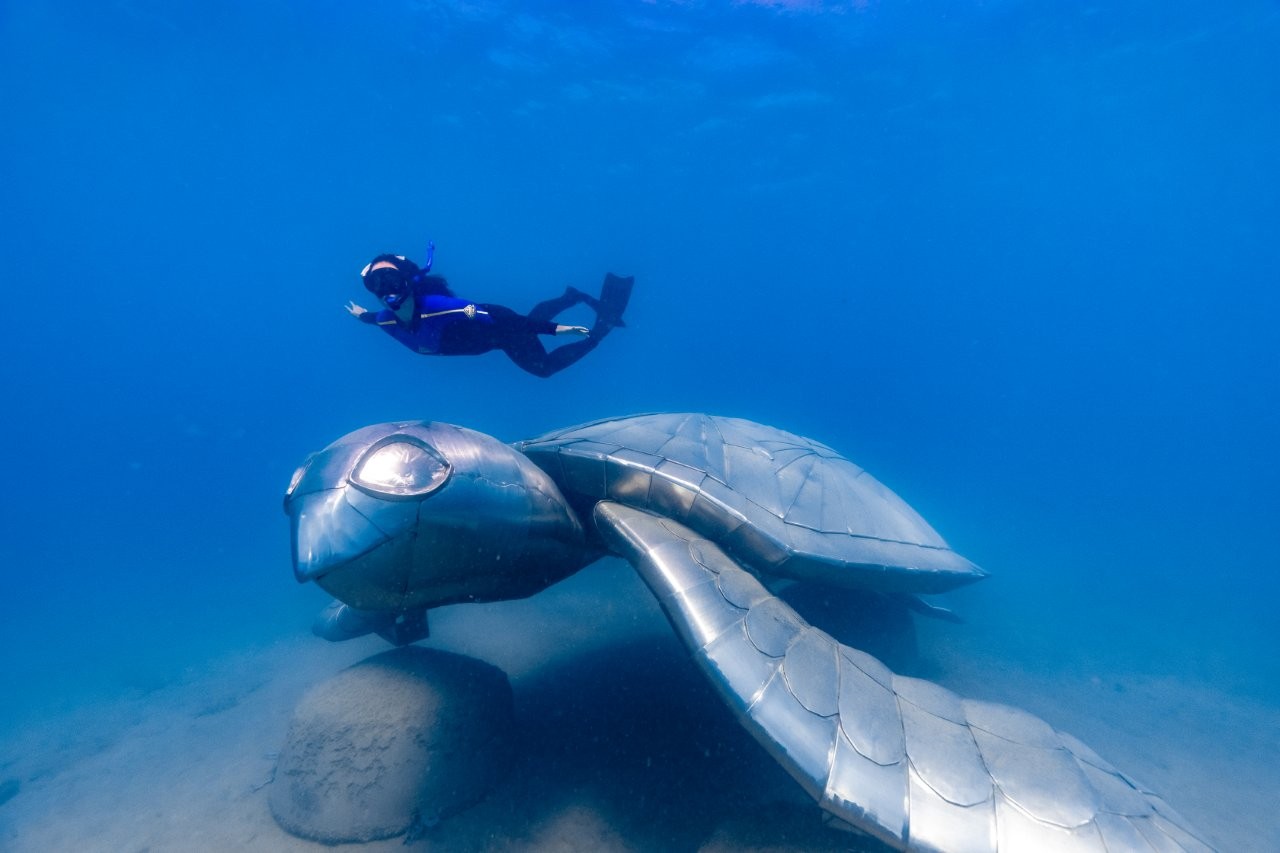
Known for its elegant sand spit and clear shallows, Langford is one of the most photogenic stops in the island group. It is also home to two of the trail’s most engaging works: Turtle Dream and Anthozoa.
Turtle Dream celebrates the hawksbill turtle, one of the reef’s most loved marine species. Anthozoa, by contrast, looks to the smallest architects of the reef – coral polyps – and magnifies them into a striking underwater form that feels both contemporary and organic.
These sites are commonly described in the seven to ten metre depth range, ideal for confident snorkellers in calm conditions and particularly rewarding for divers wanting a closer look.
Langford lies approximately 18 to 20 nautical miles from Airlie Beach, eight to ten nautical miles from Hamilton Island, and 12 to 18 nautical miles from Whitehaven Beach.
Guests often combine the sculptures with a beach walk, a long lunch at anchor, and an afternoon spent drifting in clear tropical water.
Marine life in the area may include turtles, giant clams, wrasse, damselfish, butterflyfish, and schools of reef fish moving through coral bommies.
Blue Pearl Bay: the Maori Wrasse
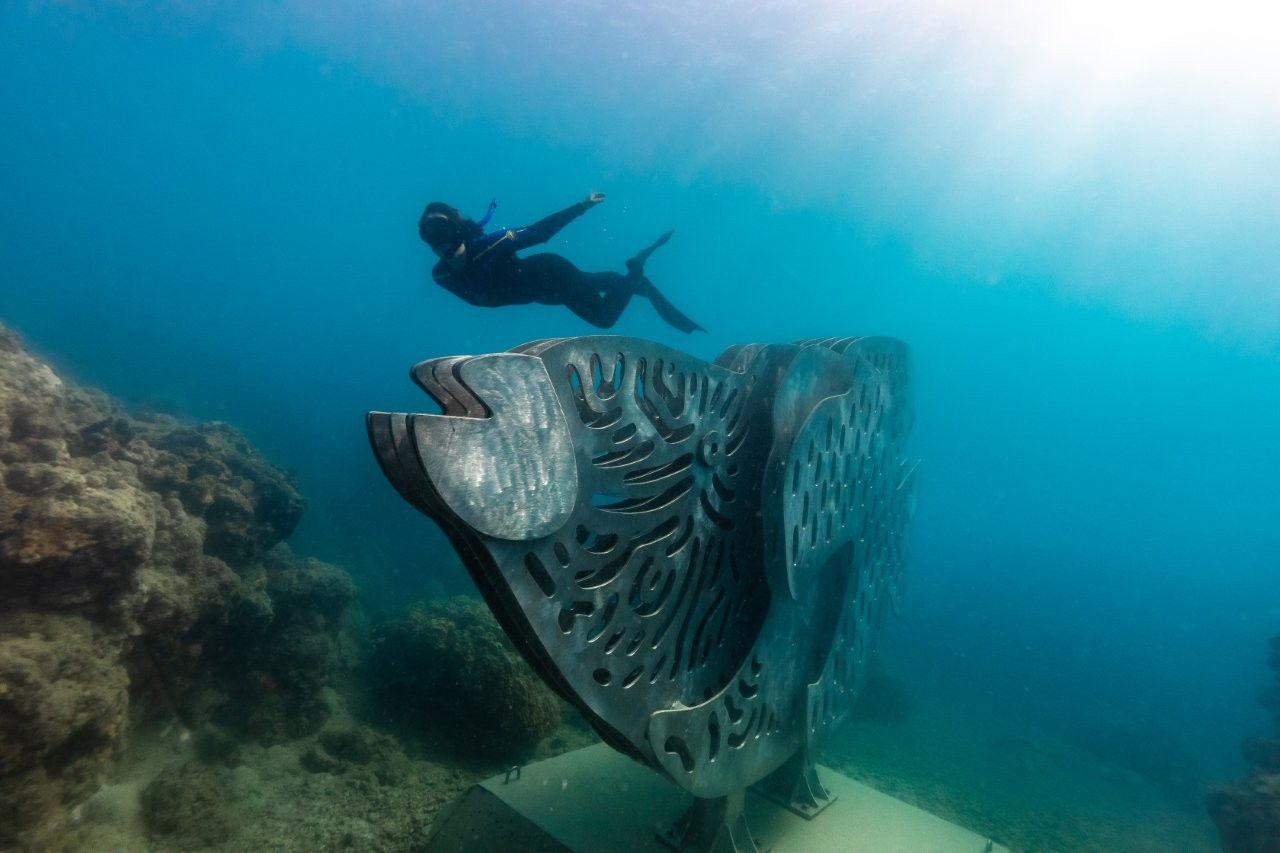
Near the Hayman Island region, Blue Pearl Bay hosts the Maori Wrasse art sculpture, honouring one of the Great Barrier Reef’s most recognisable fish species.
The humphead Maori wrasse is famed for its size, distinctive profile, and calm curiosity. Divers and snorkellers lucky enough to encounter one in the wild rarely forget it.
The sculpture sits in approximately seven to ten metres of water and is best enjoyed in clear conditions. Blue Pearl Bay is around 20 to 24 nautical miles from Airlie Beach, 10 to 14 nautical miles from Hamilton Island, and 15 to 22 nautical miles from Whitehaven Beach.
It is an easy inclusion on a northern Whitsundays route linking Hook Island, Langford, and Hayman surrounds.
Bywa: the artwork with the deepest story
Then there is Bywa.
Located at Horseshoe Bay in Bowen, north of the main island group, Bywa is often the least understood piece in the collection and perhaps the most layered.
The name comes from the Kala Lagaw Ya language of the Western Torres Strait Islands and refers to a waterspout – a swirling column of water that, in traditional mythology, carries marine animals skyward for spirits and ancestors.
The sculpture incorporates marine species familiar to Queensland waters, including turtles, coral trout, trevally, parrotfish, stingrays, sharks and reef fish. It is less a portrait of one animal and more a narrative of sea, sky, movement and life itself.
Bywa is semi-submerged at Horseshoe Bay rather than positioned like the deeper island sculptures. Bowen lies around 35 to 40 nautical miles from Airlie Beach, more than 45 nautical miles from Hamilton Island, and more than 40 nautical miles from Whitehaven Beach, making it best suited to longer coastal charters or extended Queensland itineraries.
For guests who value cultural depth as much as scenery, it is a remarkable inclusion.
When to see the sculptures
The Whitsundays is a genuine year-round luxury yacht charter destination, but the best day to visit the sculpture trail is shaped less by season than by conditions.
From April to October, many guests enjoy lower humidity, mild temperatures, and classic winter sunshine. July to September also aligns with the broader humpback whale migration through the region.
From November to March, the islands feel warmer, greener and more tropical, with bath-like water temperatures and a quieter rhythm on selected dates.
For most sculpture visits, mid to high tide is often preferred. It can provide more comfortable depth over shallower sites and easier access for snorkellers. Yet wind direction, visibility and current conditions matter just as much — which is why local knowledge on board is invaluable.
A superyacht charter itinerary with substance
A well-designed itinerary might begin in Airlie Beach or Hamilton Island before cruising to Langford Island for Turtle Dream, Anthozoa and lunch at anchor.
The following day could be spent exploring Hook Island, where Manta Ray and Migration of the Mantas are paired with snorkelling in nearby bays before an overnight stay in Nara Inlet.
From there, Blue Pearl Bay and the Maori Wrasse sculpture can lead naturally into a scenic passage south via Whitehaven Beach and Hill Inlet.
Guests with more time may continue north to Bowen and include Bywa as part of a broader coastal voyage.
The artworks are never the whole journey. They simply make the journey richer.

Why it matters
Luxury travel is no longer only about where you stay. It is about what you discover, how privately you experience it, and whether the experience feels connected to the destination itself.
Anyone can visit Whitehaven Beach.
Far fewer return home having swum above underwater artworks, learned the stories behind them, and experienced a side of the Whitsundays many travellers never knew existed.
That is often the difference between a holiday and something worth remembering.
Why guests choose YOTSPACE
YOTSPACE has been arranging yacht charters on the Great Barrier Reef for more than 20 years. Our locally based team understands the seasons, anchorages, weather patterns, and hidden experiences that elevate time on the water.
We help guests match the right yacht with the right itinerary — whether the priority is family time, diving, celebration, culture, or a slower luxury escape through the islands.
The right yacht. The right season.
Frequently Asked Questions
There are six sculptures in the Whitsundays Ngaro Underwater Marine Sculpture Trail: Manta Ray, Migration of the Mantas, Turtle Dream, Anthozoa, Maori Wrasse and Bywa.
Manta Ray is generally the easiest for snorkellers because of its shallower depth. Migration of the Mantas, Turtle Dream, Anthozoa and Maori Wrasse can also be enjoyed in calm, clear conditions by confident swimmers.
Manta Ray is commonly referenced at around five to six metres. Several others, including Turtle Dream and Maori Wrasse, are often described in the seven to ten metre range. Bywa is semi-submerged at Bowen.
Guests may encounter turtles, rays, giant clams, parrotfish, butterflyfish, coral trout, wrasse, trevally, reef fish and occasional reef sharks. Humpback whales may also be seen while cruising during winter migration months.
Mid to high tide is often preferred for shallower sites, but visibility, wind and daily conditions are equally important.
Yes. Langford Island and Hook Island pair particularly well with Whitehaven Beach on a multi-day yacht charter itinerary.
For more information on the Whitsundays underwater art trail book a discovery call to speak with a YOTSPACE crew member.
VIEW MORE CHARTER DESTINATIONS
Sign up for our YOTSPACE superyacht voyages newsletter to hear about our latest yacht charters.