
Best Way to Visit Whitehaven Beach by Private Yacht | Whitsundays Guide
Estimated reading time: 9 minutes
Whitehaven Beach is widely regarded as one of the most beautiful beaches in the world. Located on the eastern side of Whitsunday Island within the Great Barrier Reef Marine Park, the beach stretches for more than seven kilometres along a pristine coastline of brilliant white sand and clear turquoise water. Our YOTSPACE blog informs readers on the best way to visit Whitehaven Beach by private yacht.
The beach forms part of the protected Whitsunday Islands National Park and remains almost completely untouched by development. There are no hotels, restaurants or permanent structures along the shoreline, which allows the landscape to retain its natural beauty.
For visitors exploring the Whitsunday Islands, Whitehaven Beach is often the highlight of the journey. While thousands of travellers arrive each year on scheduled tour boats, experiencing the beach by private yacht offers a very different perspective.
A yacht allows guests to arrive outside peak tour hours, anchor offshore in calm waters and explore the beach at a relaxed pace. Instead of a short stop on a busy schedule, visitors can spend time walking the shoreline, swimming in clear waters and exploring nearby bays within the surrounding national park.
For many travellers chartering a yacht in the Whitsundays, Whitehaven Beach becomes the centrepiece of the itinerary.
Whitsunday Islands – Whitehaven Beach Quick Facts
- Location: Eastern side of Whitsunday Island within the Great Barrier Reef Marine Park
- Beach length: Approximately seven kilometres
- Sand composition: Nearly pure silica sand
- Main access points: Tongue Bay (north Whitehaven) and southern Whitehaven Beach
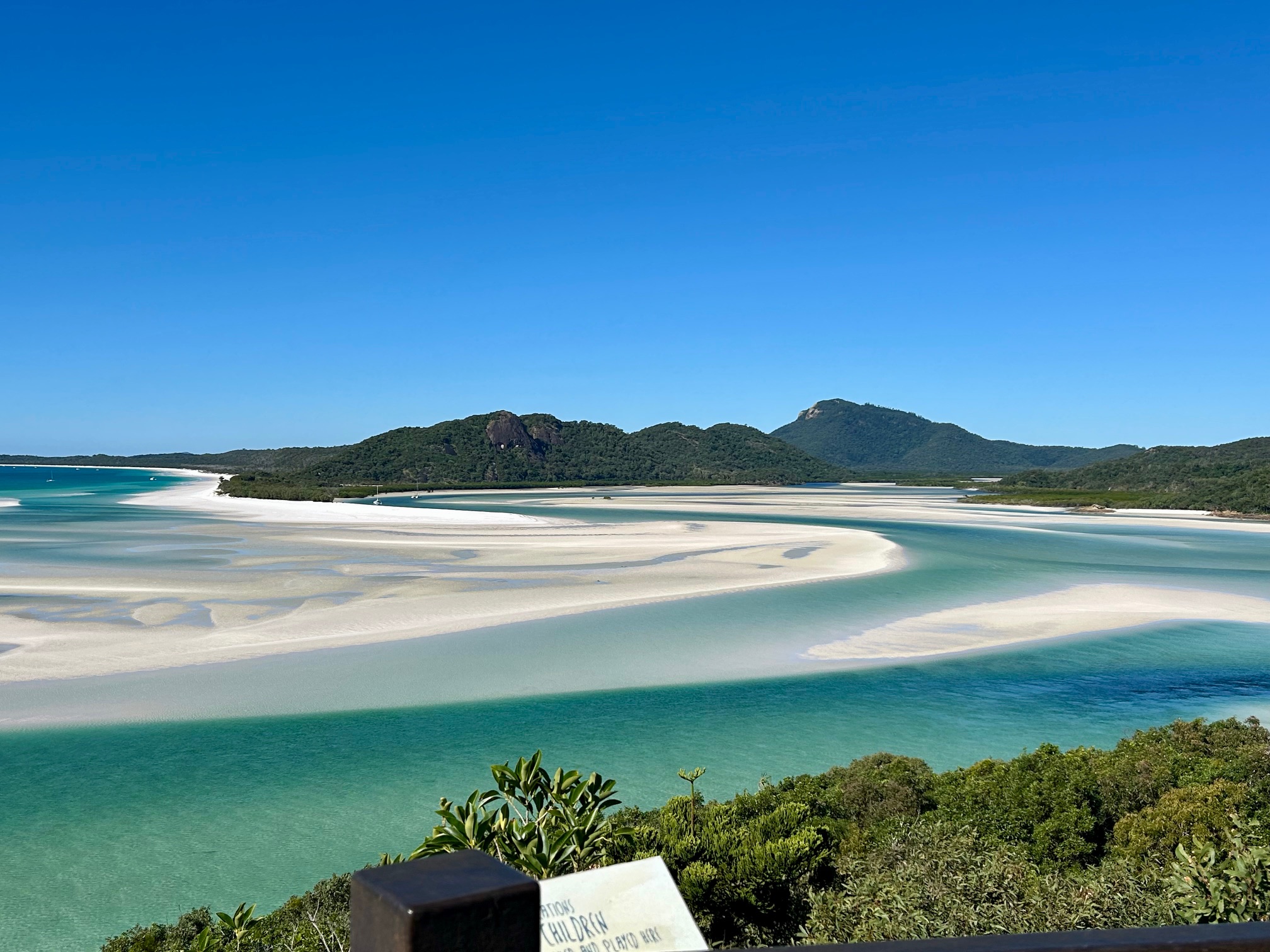
- Famous landmark: Hill Inlet and the swirling sands
- Best tide for Hill Inlet viewing: Around low tide
- Walking trail to Hill Inlet lookout: Approximately 600 metres, 10–15 minute walk
- Typical yacht anchorage: Tongue Bay or offshore along southern Whitehaven
- Water conditions: Clear shallow waters ideal for swimming
Understanding Whitehaven Beach: North vs South
Whitehaven Beach covers a large stretch of coastline, and the experience varies depending on which section of the beach you visit.
The northern end of the beach is where Hill Inlet is located. This is the most photographed area in the Whitsundays because of the swirling sand formations created by tidal movement within the inlet. The majority of tour boats visit this section of the beach due to the proximity of the Hill Inlet lookout walking track.
The southern end of Whitehaven Beach is quieter and often far less crowded. Here the beach stretches uninterrupted for kilometres, offering sweeping views across the Coral Sea. Walking tracks in this area lead to elevated viewpoints overlooking the full length of the beach and surrounding islands.
Private yacht charters often visit both locations during the same day. Guests may explore Hill Inlet first before relocating further south where the beach becomes far more secluded.
The Unique Silica Sand of Whitehaven Beach
One of the defining characteristics of Whitehaven Beach is its remarkable sand. Unlike many tropical beaches where sand is formed from broken coral fragments, Whitehaven Beach is composed of almost pure silica. This mineral gives the sand its brilliant white colour and extremely fine texture.
The grains of silica sand are so fine that they create a distinctive squeaking sound when walked upon. Visitors often describe this as “squeaky sand,” a phenomenon caused by the friction of the tiny silica grains rubbing together underfoot.
Another unusual feature of silica sand is its ability to reflect heat rather than absorb it. This allows visitors to comfortably walk barefoot along the beach even during the warmest part of the day.
The sand also contributes to the striking colours of the surrounding water. Against the bright white shoreline, the shallow waters appear in vivid shades of turquoise and pale blue.

How Whitehaven Beach Was Formed
The origin of the silica sand at Whitehaven Beach has long fascinated geologists. Unlike most beaches in the Great Barrier Reef where sand originates from nearby coral reefs, the silica sand found here is believed to have formed from quartz-rich rocks that eroded over thousands of years.
Ocean currents gradually transported the fine particles toward the Whitsunday Islands, where they accumulated along the eastern side of Whitsunday Island. Over time the sand built up into the long sweeping shoreline seen today.
Because the sand is extremely fine and contains almost no organic material, it remains exceptionally bright and clean even after centuries of tidal movement.and spit that stretches into turquoise water and is a favourite stop for beach walks, paddleboarding and sunset drinks.
Hill Inlet and the Famous Swirling Sands
Hill Inlet lies at the northern end of Whitehaven Beach and is one of the most remarkable natural landscapes in the Whitsundays.
The inlet is a tidal estuary where shifting sands mix with seawater as the tide moves in and out of the bay. As the water recedes, large sandbanks become exposed, creating swirling patterns of white sand and turquoise water.
These patterns change constantly depending on tidal movement and water depth, meaning the landscape appears slightly different each time visitors arrive. The best vantage point for viewing this phenomenon is the Hill Inlet Lookout.horages in the region and is also home to culturally significant Aboriginal rock art sites created by the Ngaro people.
Walking Trail to Hill Inlet Lookout
Visitors reach Hill Inlet Lookout via a short walking trail that begins near Tongue Bay. The trail is approximately 600 metres long and typically takes between 10 and 15 minutes to walk. The path includes a number of steps and gentle inclines as it passes through the surrounding national park vegetation.
While the track is not considered difficult, it is a natural bush trail and comfortable footwear is recommended. At the end of the trail, a raised viewing platform provides panoramic views across Hill Inlet and the northern end of Whitehaven Beach.
The swirling sand formations are most visible around low tide when large areas of sandbank are exposed within the inlet.
How Yachts Visit Whitehaven Beach
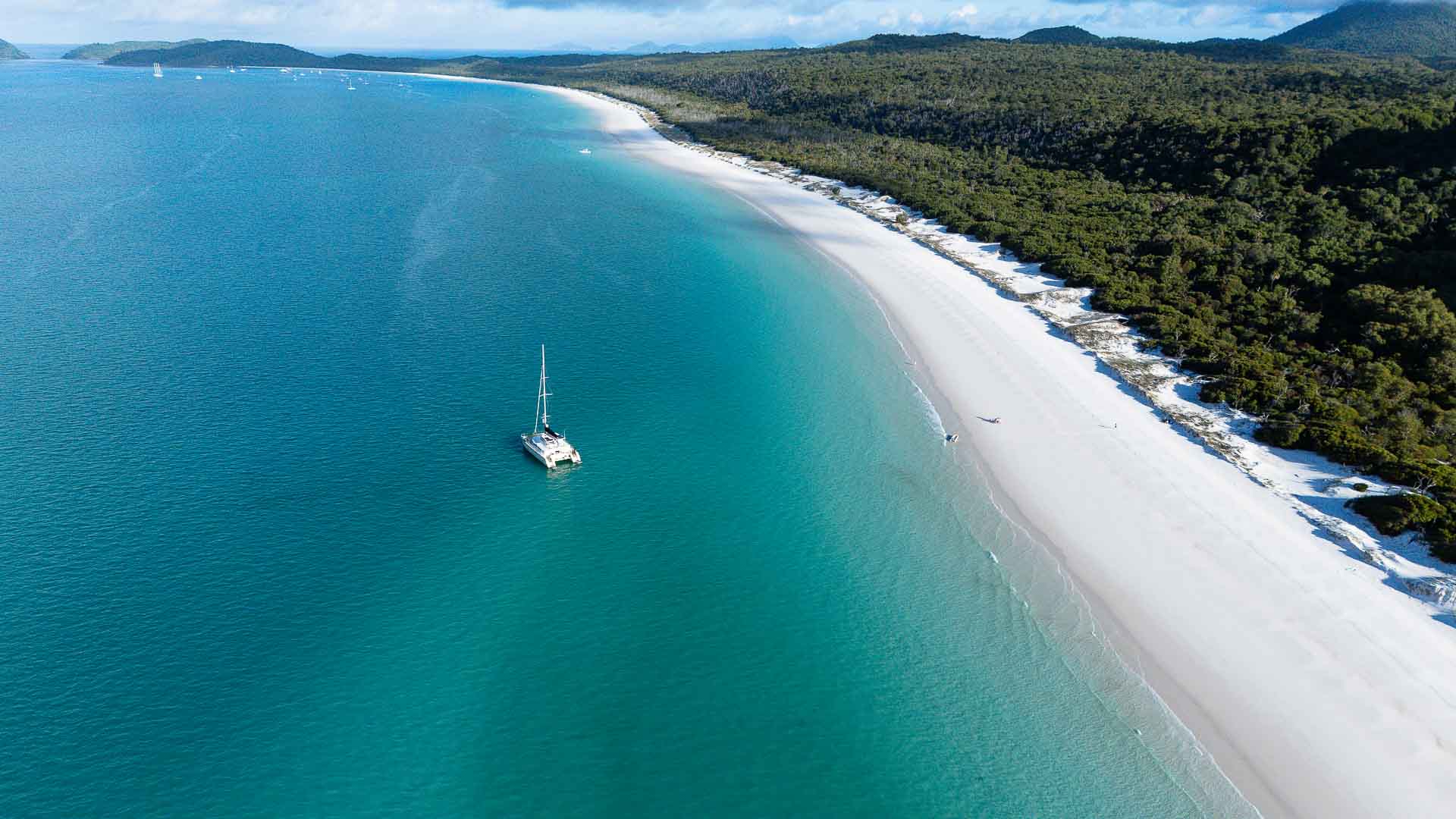
Private yachts usually approach Whitehaven Beach from the northern side of Whitsunday Island. Most vessels anchor near Tongue Bay, a sheltered anchorage located close to the entrance of Hill Inlet. Guests travel to shore by tender before walking the short track to Hill Inlet Lookout.
After exploring the northern section of the beach, yachts often relocate further south along Whitehaven Beach.
The southern area offers quieter sections of shoreline and another walking track leading to an elevated South Whitehaven Lookout – overlooking the full seven-kilometre stretch of beach.
This two-stop approach allows charter guests to experience both the famous Hill Inlet landscape and the long uninterrupted beauty of southern Whitehaven.
Swimming and Marine Life at Whitehaven Beach
The waters surrounding Whitehaven Beach are typically calm and exceptionally clear, making the area ideal for swimming.
Unlike many other parts of the Great Barrier Reef, there are no coral reefs directly along the beach itself. This creates wide sandy swimming areas with gentle entry into the water.
Marine life is still present throughout the surrounding waters. Visitors may occasionally see sea turtles, rays and schools of tropical fish in nearby bays.
During the winter months between June and September, humpback whales migrate along the Queensland coastline and are sometimes sighted in the wider Whitsunday region.
Environmental Protection and National Park Regulations
Whitehaven Beach forms part of the Whitsunday Islands National Park and the Great Barrier Reef Marine Park.
These protected areas are managed to preserve the natural environment and ensure that the region’s ecosystems remain healthy for future generations.
Visitors are asked to follow several guidelines when visiting the beach, including removing all rubbish, avoiding disturbance to wildlife and respecting designated walking tracks.
These protections help maintain the pristine condition that has made Whitehaven Beach one of the most famous natural locations in Australia.
The Best Time of Day to Visit Whitehaven Beach
The experience at Whitehaven Beach can vary significantly depending on the time of day. Early mornings often provide the calmest conditions and the quietest beaches before most tour vessels arrive. Late afternoons also offer spectacular lighting across the water and sand as the sun lowers toward the horizon.
Captains typically plan visits around tidal conditions so that guests can view Hill Inlet when the swirling sand patterns are most dramatic.
Experiencing Whitehaven Beach by Private Yacht
Arriving by private yacht allows visitors to experience Whitehaven Beach in a far more flexible and personal way than scheduled day tours.
Instead of a short stop on a fixed timetable, guests can explore the beach at their own pace, swim in quiet sections of the bay and enjoy uninterrupted views of one of Australia’s most extraordinary landscapes.
Many yacht charters combine a visit to Whitehaven Beach with snorkelling at nearby islands such as Hook Island or scenic helicopter flights over the Great Barrier Reef.
For travellers exploring the Whitsunday Islands by yacht, Whitehaven Beach often becomes the defining moment of the journey.
Frequently Asked Questions
Whitehaven Beach is famous for its brilliant white silica sand that squeaks when you walk and turquoise water. The beach stretches more than seven kilometres and is considered one of the most beautiful beaches in the world.
Whitehaven Beach is located on Whitsunday Island within the Whitsunday Islands in Queensland, Australia, inside the Great Barrier Reef Marine Park. Charter Yachts visit Whitehaven Beach from Airlie Beach, or from Hamilton Island which also has an airport and yacht marina.
Yes. The beach offers clear shallow waters that are ideal for swimming and relaxing along the shoreline.
Hill Inlet is a tidal estuary at the northern end of Whitehaven Beach where sandbanks create swirling patterns of white sand and turquoise water. It’s best to view from the Hill Inlet Lookout, which is a short walk from Tongue Bay.
The swirling sands of Hill Inlet are most visible around low tide when sandbanks are exposed within the inlet.
Whitehaven Beach remains one of the most extraordinary destinations within the Whitsunday Islands.
Over many years of arranging superyacht charters in the region, the YOTSPACE team has seen how dramatically the experience changes when visitors arrive by private yacht rather than scheduled tour vessels.
The ability to plan visits around tides, explore quieter sections of the beach and combine the experience with nearby islands allows guests to see Whitehaven Beach in a far more personal and memorable way.
For many travellers exploring the Whitsundays by yacht, walking along the brilliant white sands of Whitehaven becomes the highlight of the entire journey.
VIEW MORE CHARTER DESTINATIONS
Sign up for our YOTSPACE superyacht voyages newsletter to hear about our latest yacht charters.