The Ribbon Reefs | The Great Barrier Reef Most People Never See
The Ribbon Reefs from Port Douglas | Insider Guide to Diving the Northern Great Barrier Reef
Estimated reading time: 13 minutes
At first light, the Coral Sea north of Port Douglas can appear almost unnaturally calm.
The reef boats leave the marina one by one in darkness, their deck lights reflecting softly across black water while crew secure dive tanks, camera housings and tenders for the long run north. By sunrise, the Queensland coastline has usually disappeared behind them entirely and the continental shelf begins falling away beneath the hull into deep ocean water.
This is where the Great Barrier Reef starts changing character.
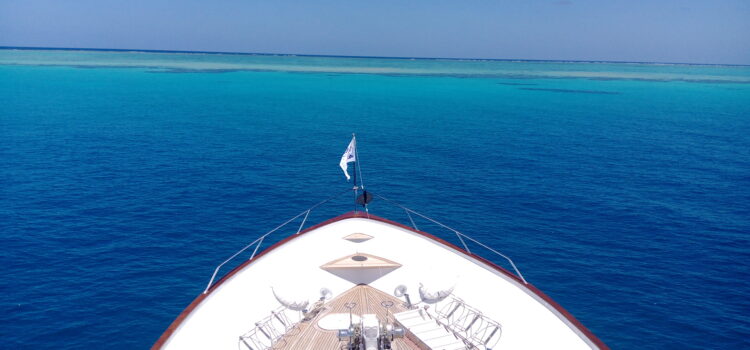
The pale turquoise shallows most visitors associate with tropical Queensland slowly darken into cobalt blue as oceanic currents from the Coral Sea collide against the outer reef edge. Visibility sharpens. The reef structures become steeper and more dramatic. Giant sea fans appear along the current lines while immense schools of fusiliers and barracuda suspend themselves above coral bommies rising from the seabed like submerged cliffs.
Then the whales arrive.
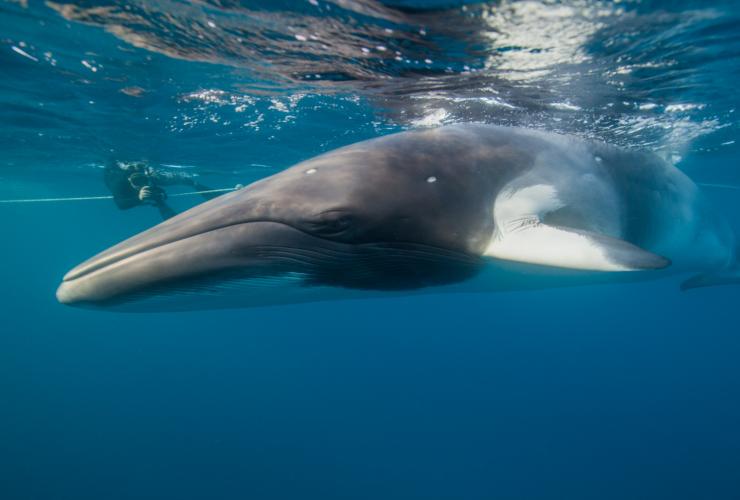
Not humpbacks at first, but dwarf minke whales emerging silently from blue water beyond the shelf, circling divers with a level of curiosity that even experienced marine biologists still struggle to explain. Veteran dive crews who have spent decades exploring the Ribbon Reefs often go strangely quiet when the minkes appear. Something about the encounters changes the atmosphere aboard entirely.
Perhaps because there are very few places left on Earth where wildlife interactions still feel this genuinely unpredictable.
Long before social media transformed reef travel into a checklist experience, divers exploring the Ribbon Reefs north of Port Douglas understood these reef systems were different. Not simply because the coral was healthier or the visibility clearer, but because the ecosystem itself felt older, larger and somehow wilder than the reefs further south.
Even now, many expedition divers consider the Ribbon Reefs among the most fascinating marine environments remaining anywhere in the world.
And yet, most people visiting the Great Barrier Reef never even realise they exist.
Where the Great Barrier Reef Begins to Feel Wild Again
The Great Barrier Reef is often spoken about as though it were one continuous reef system, but experienced divers know the ecosystem changes dramatically as you move north from Port Douglas toward the Coral Sea.
The Ribbon Reefs stretch along the outer edge of the continental shelf approximately 110 to 200 kilometres north-east of Port Douglas, extending toward Cod Hole and Lizard Island. Unlike many inshore reefs influenced by river systems and coastal runoff, these reef systems remain intensely oceanic in character, exposed directly to nutrient-rich currents pushing down from the Pacific.
That geography changes everything.
Visibility during the southern winter months regularly exceeds thirty metres and can push beyond forty metres in ideal conditions between June and September. Water temperatures during winter typically range between 22°C and 25°C before warming to 27°C–30°C through summer. But what leaves the strongest impression on divers is not simply the clarity.
It is the scale.
North of Agincourt Reef, the bommies begin rising from the seabed in formations that feel less like coral gardens and more like submerged mountain ranges. Vast plate corals overlap like amphitheatres while steep reef walls disappear suddenly into blue water patrolled by giant trevally, dogtooth tuna and reef sharks moving continuously through the current lines.
The first time you descend beside Ribbon Reef Number 10 in clear winter conditions, it becomes obvious why underwater filmmakers keep returning here.
The reef does not feel decorative.
It feels ancient.
And the further north you travel, the quieter the modern world becomes.

Why Marine Filmmakers and Scientists Keep Returning to the Ribbon Reefs
For decades, some of the world’s leading marine cinematographers and scientists have continued returning to this section of the northern Great Barrier Reef.
Locally based marine biologist and filmmaker Richard Fitzpatrick, through BIOPIXEL, has spent years documenting reef ecosystems, shark behaviour and marine migrations throughout the Coral Sea and northern Great Barrier Reef for BBC, National Geographic, Netflix, Discovery Channel and productions associated with James Cameron.
Sir David Attenborough once described the Great Barrier Reef as one of the most memorable places he had explored anywhere on Earth, and much of the footage that shaped global understanding of these northern reef systems was filmed in Far North Queensland.
There is a reason filmmakers become obsessed with this region.
Very few ecosystems still support this level of coral diversity and pelagic activity within a single marine environment. Giant sea fan forests transition into hard coral gardens alive with anthias while whip corals, giant clam fields and soft coral overhangs create endlessly changing underwater terrain. Certain sections of the Ribbon Reefs become transformed entirely by current strength and tidal movement, particularly during early morning dives when barracuda schools and giant trevally begin hunting aggressively along the drop-offs.
Experienced photographers often favour first-light dives around Lighthouse Bommie because the lower winter sun angles create dramatic shafts of light through the coral towers before currents intensify later in the morning. Local crews also know certain reef edges become noticeably more active during incoming tides when nutrient-rich water pushes harder against the shelf, drawing pelagic species closer toward the bommies.
Even among seasoned expedition divers, there remains a sense that the Ribbon Reefs still contain behaviours and ecological relationships only partially understood.
That uncertainty is part of the fascination.

The Coral Structures Most Divers Never Experience
Many divers arrive expecting colour.
What they rarely expect is complexity.
The northern Great Barrier Reef contains one of the widest varieties of coral morphology found anywhere in the world. Massive plate corals layer over one another in formations resembling underwater amphitheatres while delicate staghorn forests extend across shallow reef platforms alive with juvenile reef fish. Giant sea fans rise several metres into the current while whip corals, mushroom corals and intricate hard coral gardens create endlessly changing underwater textures.
The Ribbon Reefs are also famous among underwater photographers for the way light behaves across the reef structures during winter.
Lower sun angles between June and August create dramatic shafts of light through the bommies during early morning dives, particularly around Steve’s Bommie, Lighthouse Bommie and sections of Ribbon Reef Number 10. On calm days, visibility becomes so clear that divers suspended beside the reef edge often lose all sense of depth perception, drifting between immense coral walls and blue water disappearing into darkness below.
One of the lesser-known characteristics of the Ribbon Reefs is how quickly conditions can change between neighbouring reef systems. A calm shallow lagoon filled with giant clams, turtles and anemonefish may sit only a few nautical miles from a current-swept wall alive with pelagic movement.
Veteran dive crews often watch the bird activity above the reef edge before deciding where to position tenders. Frigatebirds and terns circling low over current lines can indicate bait movement below the surface long before divers enter the water.
This constant variation is one of the reasons experienced divers rarely tire of the region. The reef never looks exactly the same twice.
The Winter Migration That Changes Everything
Every June and July, something extraordinary begins unfolding along the outer reef edge north of Port Douglas.
Out beyond the continental shelf, dwarf minke whales begin arriving from the deep waters of the Coral Sea in one of the least understood marine migrations anywhere in Australian waters.
Unlike humpback whales, which migrate visibly through open ocean corridors, dwarf minkes behave differently.
They investigate.
The Ribbon Reefs are one of the only places on Earth where regulated in-water encounters with these whales are permitted, and divers who experience them rarely describe the encounters in ordinary terms. Veteran crews often notice the same shift aboard once the first whales appear. People move more quietly. Conversations become shorter. Everyone begins scanning the water differently.
Then suddenly, without warning, the whales emerge from the blue.
Divers floating silently beneath the surface often describe the same unsettling sensation afterwards — prolonged eye contact. The whales circle repeatedly beneath swimmers and vessels, approaching close enough for scars along their flanks and pale markings behind their eyes to become visible before disappearing once more into dark water beyond the shelf.
Some interactions last minutes.
Others continue for hours.
And because the whales choose the interaction rather than the divers, every encounter feels intensely personal and completely unpredictable.
There are very few wildlife experiences left on Earth that still feel this genuinely wild.
At the same time, humpback whales migrate through the Coral Sea beyond the reef edge while reef sharks, giant trevally, dogtooth tuna and eagle rays patrol the current lines surrounding the outer bommies.
On calm nights aboard expedition yachts anchored north of Cod Hole, the sound of humpback whales breathing across still water occasionally carries through the darkness long after divers have returned from night dives.
It is one of those moments people rarely forget.
What Divers Rarely Expect About Cod Hole
Most divers arrive at Cod Hole expecting giant potato cod.
What surprises them is the behaviour of the fish.
Some of the cod inhabiting these reef systems exceed one hundred kilograms in weight, yet move through divers with an unnerving calmness that feels strangely intelligent the first time you encounter it. They hover motionless beside the bommies before drifting silently back toward the reef wall with slow, deliberate movements.
Local dive crews who have spent decades on these reefs often recognise individual cod by scars, markings and behaviour. Some fish repeatedly approach photographers while others remain cautious depending on current strength and diver activity.
Marine biologists still debate why the cod here became so unusually tolerant of human interaction.
But what experienced divers remember most is often not the size of the fish.
It is the silence.
The moment when a creature that large stops directly in front of you and simply watches.
The surrounding reef systems near Cod Hole are also known for strong pelagic activity during tidal exchanges, particularly when giant trevally, barracuda and reef sharks move aggressively through bait schools gathering along the reef edge.
The incoming tides around Steve’s Bommie can become particularly active, with currents accelerating quickly along sections of the reef wall where pelagic fish often gather in large numbers.
This is not passive diving. It is dynamic, oceanic diving shaped constantly by movement, current and migration.

The Reef Changes Completely After Dark
One of the least discussed aspects of the Ribbon Reefs is how dramatically the ecosystem transforms after sunset.
As the final light disappears beyond the Coral Sea, entirely different marine behaviour begins emerging from the bommies and coral walls. Spanish dancers move through torchlight in fluorescent waves while reef squid hover silently over coral ledges reflecting silver beneath camera lights. Sleeping parrotfish cocoon themselves inside translucent mucus envelopes while ribbon eels emerge cautiously from sandy reef edges hidden during daylight hours.
Experienced night divers often describe the Ribbon Reefs after dark as feeling almost extraterrestrial.
The reef slows down.
The colours deepen.
And every movement beyond the beam of a dive torch feels magnified by the darkness surrounding it.
Even the smell of the ocean changes offshore after rain moves across the Coral Sea — cleaner, colder and heavier with salt carried southward by shifting winds beyond the shelf.
Why the Ribbon Reefs Reward Slow Expeditions
The biggest mistake travellers make when exploring the northern Great Barrier Reef is trying to experience it too quickly.
This part of the reef reveals itself slowly.
Weather systems alter visibility overnight. Thermoclines change water temperatures between neighbouring reef systems while currents reshape pelagic activity by the hour. A calm shallow bommie one afternoon may become alive with hunting trevally and barracuda during the following morning’s tidal exchange.
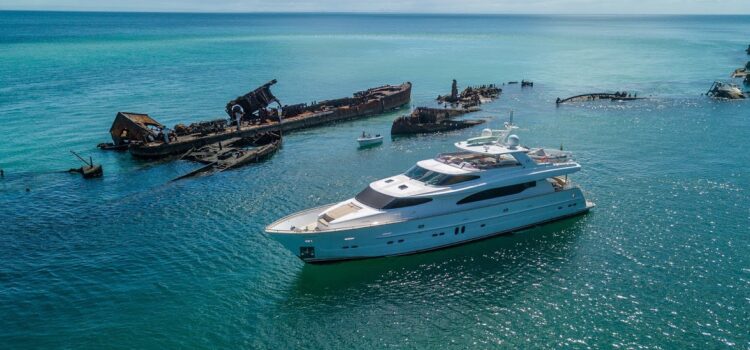
This unpredictability is precisely why experienced divers overwhelmingly favour multi-night liveaboard and superyacht expeditions departing from Port Douglas toward Cod Hole and Lizard Island.
Seven to ten days is widely regarded as the ideal expedition timeframe for exploring the northern reef systems properly.
The longer you spend here, the more the ecosystem begins revealing itself.
Some mornings begin drifting beside giant potato cod at first light before transitioning into shallow coral lagoons alive with turtles and giant clams later that afternoon. Other evenings end anchored beside isolated coral cays while humpback whales breach beyond the reef edge beneath skies completely untouched by artificial light.
And eventually something unexpected happens.
Returning south toward Port Douglas after days offshore begins feeling strangely unnatural. The noise of civilisation feels intrusive again. Mobile reception returns. The coastline reappears. For many divers, that is when they realise how completely the Ribbon Reefs pulled them away from the modern world.
Lizard Island and the Feeling of Total Isolation
Eventually, after days moving north through the Ribbon Reefs, the granite peaks of Lizard Island begin appearing on the horizon.
Rising abruptly from deep ocean water approximately 130 nautical miles north of Port Douglas, the island feels wonderfully isolated from the modern world. The surrounding reef systems contain some of the clearest water anywhere on the Great Barrier Reef while the island itself has become synonymous with both luxury isolation and marine science.
The Lizard Island Research Station remains one of the world’s leading tropical marine research facilities, attracting scientists studying coral ecosystems, reef resilience and marine biodiversity from across the globe.
For expedition guests, the island also provides one of Australia’s most rewarding luxury pre or post charter experiences. Guests may fly directly from Cairns to Lizard Island before boarding a superyacht expedition or conclude their journey with several nights overlooking the Coral Sea before returning south.
But what makes Lizard Island unforgettable is not simply the luxury or the diving.
It is the feeling of distance.
The sensation that the modern world has quietly disappeared somewhere beyond the horizon.
Why Divers Who Know the Reef Best Keep Returning
There are many beautiful reefs left in the world.
Very few still feel genuinely wild.
The Ribbon Reefs remain one of the last places where coral ecosystems, pelagic migrations and remote marine environments continue operating at immense scale. This is why experienced divers, underwater photographers and marine biologists keep returning decade after decade.
Not simply because visibility often exceeds thirty metres.
Not simply because the region supports dwarf minke whales, humpback whales, giant potato cod, reef sharks, eagle rays, giant clams, turtles and some of the healthiest coral systems on the Great Barrier Reef.
But because somewhere beyond the horizon north of Port Douglas, out along the edge of the Coral Sea where the reef walls disappear into blue water and the whales emerge silently from the shelf, the Great Barrier Reef still behaves according to ancient rhythms untouched by the modern world.
And for those who spend enough time there, the memory that remains is rarely a single dive site or wildlife encounter.
It is the feeling of drifting beside the Ribbon Reefs at dusk with no land visible in any direction, listening to humpback whales breathing somewhere out beyond the shelf while the last light disappears across the Coral Sea.
VIEW MORE CHARTER DESTINATIONS
Sign up for our YOTSPACE superyacht voyages newsletter to hear about our latest yacht charters.